ServicesRain Chains
Rain Chain Installation in Moncks Corner, SC
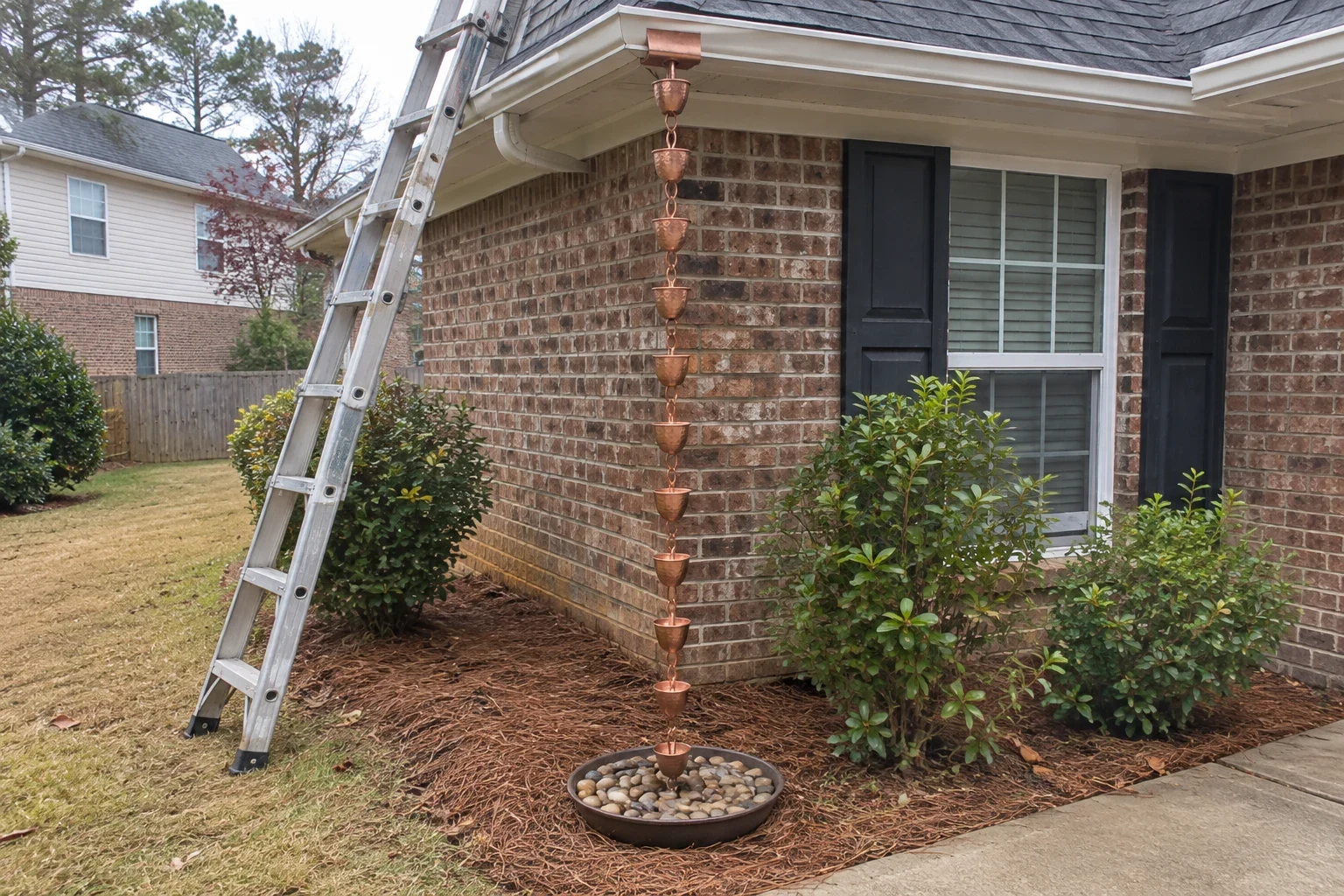
A rain chain guides roof water from your gutter to the ground in plain view. We help you pick a style that handles real rain, hang it on a solid outlet, anchor it and set a basin underneath. You get a nice look by the door and a dry, steady drop.
What a Rain Chain Does and When It Fits
A rain chain hangs from the outlet hole in your gutter. Water follows the chain down instead of pouring off in a sheet. Most people put one by a front entry, a porch, a patio or a garden bed where they want to see and hear the water.
They are not right for every corner of your home. A chain carries less water than a closed pipe. On a long roof run that collects a lot of rain, a summer thunderstorm can overwhelm it and spill over the sides. We look at how much roof drains to that spot and tell you straight if a chain will keep up.
We also look past the price tag. A cheap chain can look fine the first season, then bend, fade or rust. A better one costs more at the start and asks almost nothing of you after. We lay out both so your choice still makes sense years from now.
What Our Rain Chain Work Includes
- Style and material advice
- We show you cup and link styles in copper, aluminum and coated steel. Cups slow and hold water better, so they splash less. Links look lighter but let more water fly off in heavy rain.
- Outlet fitting
- We fit a gutter adapter or support bar so the chain hangs centered in the outlet. If the hole is too small or in the wrong spot, we correct it so water feeds the chain and does not run past it.
- Ground anchor
- A loose chain swings in wind and can bang against siding or a post. We tie the bottom end to a stake or the basin so it stays plumb.
- Basin or splash area
- We set a basin, a bed of river rock or a rain barrel under the chain. That keeps water from digging a hole at the bottom and moves it away from your foundation.
- Check of the gutter run
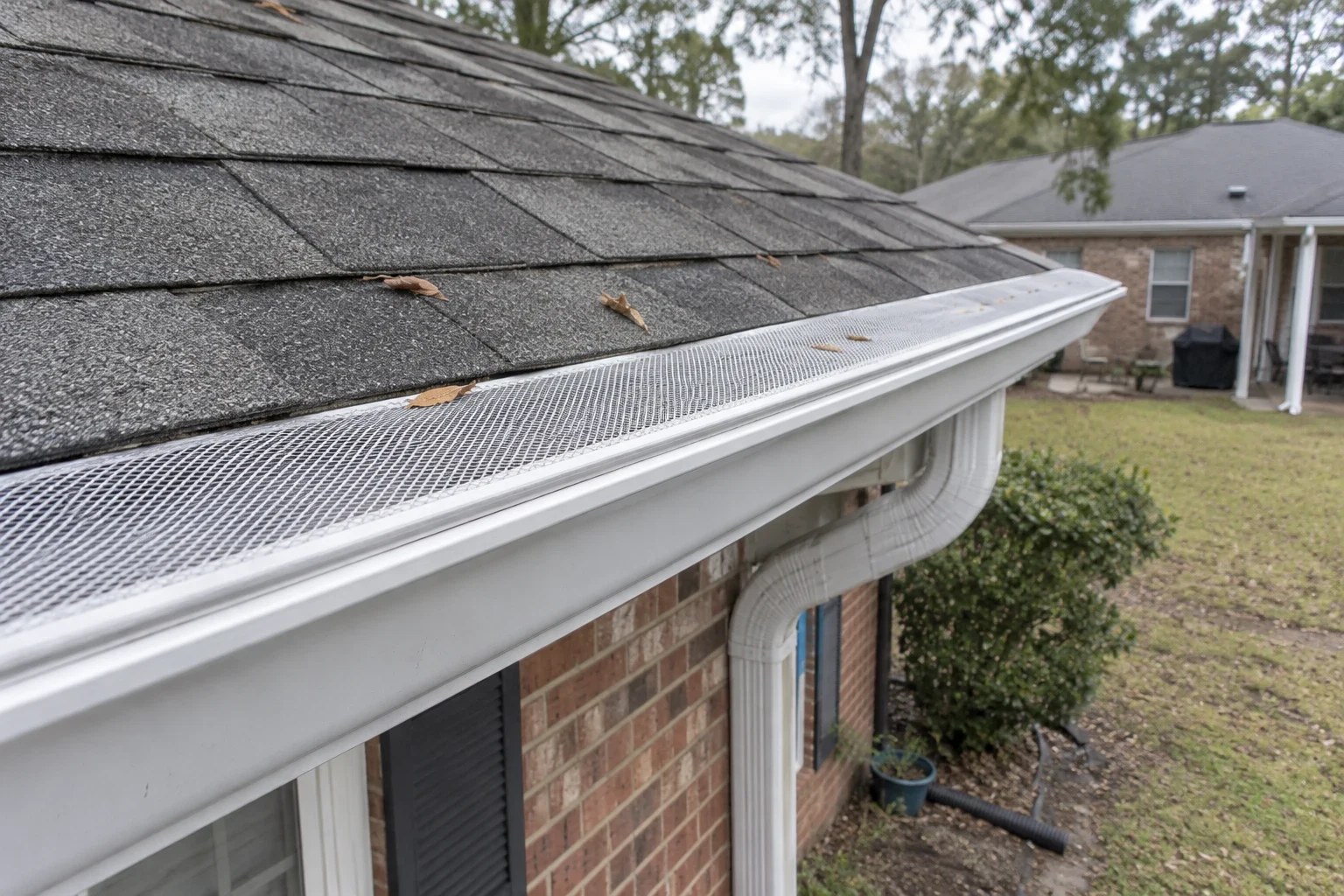
- We look at the gutter the chain hangs from. If it sags or pitches the wrong way, we tell you, since gutter repair may need to come first.
Signs a Rain Chain Makes Sense for Your Home
Water sheets off by the door
If rain pours off the roof right where you walk in, a chain can gather it into one controlled drop off to the side.
You want a cleaner look at the entry
A plain pipe on the front of the house can look out of place. A copper chain gives the same spot a finished look.
A small roof section drains to one spot
Porches, sunrooms and short eaves are a good match. Less roof area means a chain can carry the flow without spilling.
Your current chain splashes or sways
Thin link chains with no anchor and no basin tend to throw water on siding. Swapping to cups and anchoring the bottom usually fixes it.
An old chain has rusted or broken
Painted steel chains can rust and drip stains onto patios. Replacing one with copper or aluminum ends that.
What Sets the Price of Your Rain Chain
The chain you pick drives a big share of the bill. The rest depends on how much work the gutter outlet and the ground below need. Each part gets its own line on our estimate, so nothing is hidden. We also walk you through how a higher-priced metal can come out cheaper over the years you live with it.
Material
Solid copper is the priciest at the start. It won't rust, and over time it darkens to brown and then green with no paint at all. Aluminum and coated steel cost less but may fade or chip as the years go by.
Style and length
Cup chains take more metal than link chains. A drop from a second-story eave needs more chain than a one-story porch.
Basin and ground work
A stake and a bed of rock is the simpler setup. A decorative basin or a rain barrel means more parts and more time.
Gutter condition
Moving or resizing the outlet adds to the job. So does fixing a gutter that won't send water to the chain.
How many chains
Hanging several chains in one trip usually brings the cost per chain down compared to doing them one at a time.
How a Rain Chain Install Goes
- 1
Start with a phone call
Let us know which spot on your home you have in mind and what goes wrong there when it rains. Then we pick a day to stop by and see it.
- 2
Look at the roof and outlet
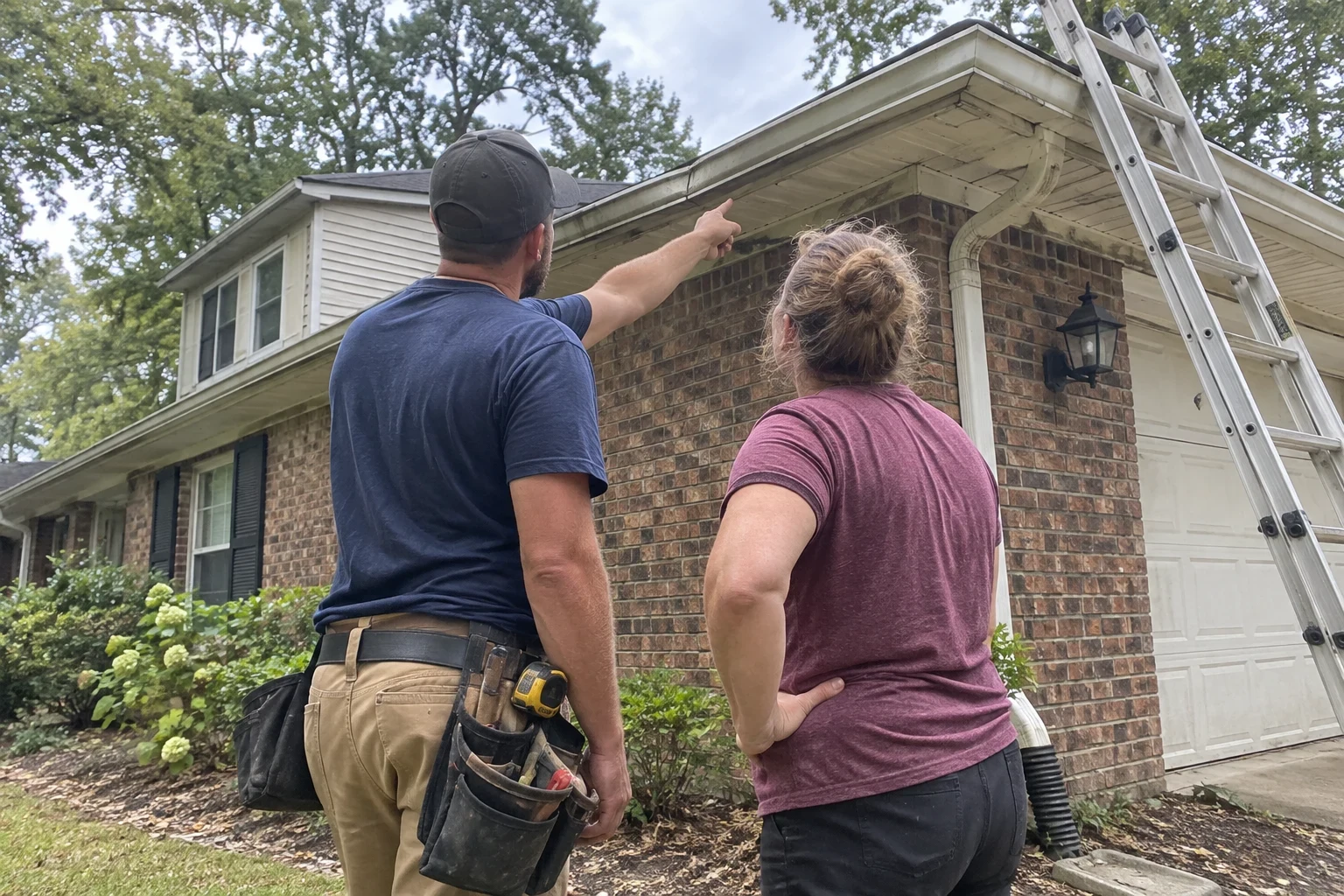
On site we check how much roof drains to that corner, the gutter's pitch and the outlet size. We give you a written estimate with each part listed.
- 3
Hang and anchor
We fit the outlet adapter, cut the chain to the right length and tie the bottom down. Then we set the basin or rock bed and level it.
- 4
Test and clean up
We run water into the gutter and watch it travel down the chain and settle in the basin. Boxes, scraps and loose gravel go with us when we leave.
Rain Chain Questions We Hear
Can a rain chain handle a heavy summer storm?
It depends on how much roof drains to it. On a porch or short eave, a cup chain usually keeps up fine. On a large roof section, a hard downpour can spill over the cups. We check that before we recommend one.
Will it splash on my siding?
Some splash is normal in hard rain. Cup styles splash much less than links. Anchoring the bottom and setting a basin keeps most of the water where it belongs.
Does copper really turn green?
Yes, over time. It starts bright, goes darker brown, then picks up green tones as it weathers. Many people want that look. If you want it to stay bright, it can be sealed, but it will need resealing.
Do I need new gutters to put up a chain?
Most of the time, no. We set an adapter into the outlet that's already there. If your gutter sags or the outlet sits in a poor spot, you'll hear that from us before any work starts.
What upkeep does a rain chain need?
Very little. Check now and then that the anchor is tight and the basin has not filled with silt or leaves. Copper and aluminum chains need no paint.
What happens with high winds?
An anchored chain stays in place in normal storms. Before a big tropical storm, some people unhook the bottom and tie the chain up out of the way. We can show you how it comes loose.
Pick a Rain Chain That Holds Up
Give us a call and tell us which spot you have in mind. We'll come out, check the roof and the outlet, and hand you a written estimate with a straight answer on which material earns its price there.